


No products in the cart.
Mountain olive grove
The Finca Regenerativa Valle del Conde is located in the south of the province of Cordoba, in the municipality of Luque.
It is located within the Natural Park of the Sierras Subbéticas, which since 2015 has been designated as a UNESCO World Geopark.
The farm occupies an area of approximately 230 hectares, of which 217 are occupied by Ecological Mountain Olive groves and the rest are wooded pasture land, pines and a mountain range called El Arrimadizo, of approximately 4 hectares, which is within the farm itself.
We are located in a valley with altitudes between 700 m. and 910 m. above sea level.
Due to the steep and rugged orography of the area, the average slope is 20% with percentages of over 35% in some cases and even close to 40% in some areas.
The soils are limestone with rock outcrops in numerous plots. The ph is basic with a composition that is mostly clayey or clay loam, with the presence of silt in some areas.
Our olive grove is approximately 110-120 years old. It is what is known as a traditional mountain olive grove, with wide frames that extend between 10-12 and 14 metres apart, in some cases.
They are 2, 3 and 4 foot olive groves, in some cases, and the most representative varieties are Picudo and Picual.
The plantation is interspersed with these two dominant varieties, although other varieties can also be seen sporadically, which are less abundant but which make up a biodiverse olive grove rich in nuances that are later manifested in our oils.
These more minority varieties include various types of Nevadillos, Chorruos, Pajareros, Hojiblancos, various types of acebuches, etc.
The local variety in these areas of the Subbética, from which top-quality oil is obtained, is the Picuda. This type of olive tree is a very good pollinator. For this reason, and thanks to the wisdom of our ancestors, it was mixed with other varieties to achieve better harvests.
Regenerative Agro-agriculture
In the 1980s, the term Regenerative Agriculture began to be used as an advance on organic farming. Ecological or organic agriculture proposes practices that focus on maintaining the conditions of the soil ecosystem, not damaging it, conserving its biodiversity and reducing pollution. But Regenerative Agriculture goes a ‘step further’ and not only maintains but also promotes the recovery of degraded soils; it exponentially increases their organic matter content, their capacity to retain and use water, etc.
Regenerative Agriculture claims that soil health is intrinsically linked to the total sustainability of our food system, from the nutritional quality of plants and animals to the future of our planet. Its aim is therefore to regenerate, stimulate and maintain the fertility and biodiversity of the soil: it promotes soil that supports a richness of life and is capable of producing healthier and more nutritious food, using nature’s own resources.
Based on this, the practices he proposes are characterised by eliminating tillage which breaks up the soil structure; maintaining vegetation cover so as not to leave the land bare and prevent soil erosion; increasing plant diversity and production; combining agriculture and livestock farming, using grazing animals to fertilise the land, while the animals enjoy good food; planning to make better use of water and avoiding the use of heavy machinery, fertilisers, fertilisers and pesticides; combining agriculture and livestock farming, using grazing animals to fertilise the land, while the animals enjoy a good diet; planning a better use of water and avoiding the use of heavy machinery, fertilisers, pesticides and synthetic chemical fertilisers so as not to deteriorate the life of the soil, nor depend on large agrochemical companies.
The tasks of Our Olive Grove
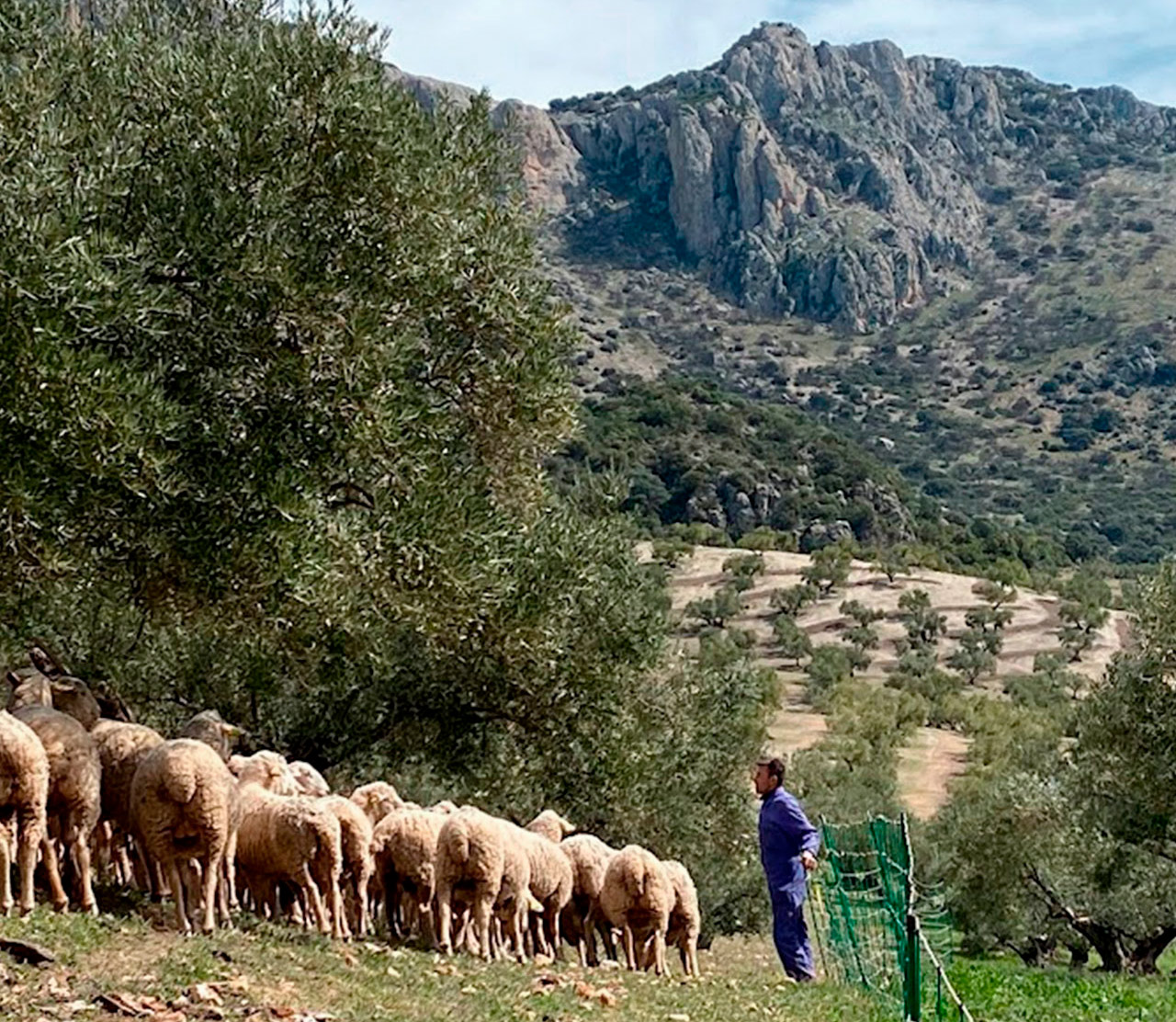
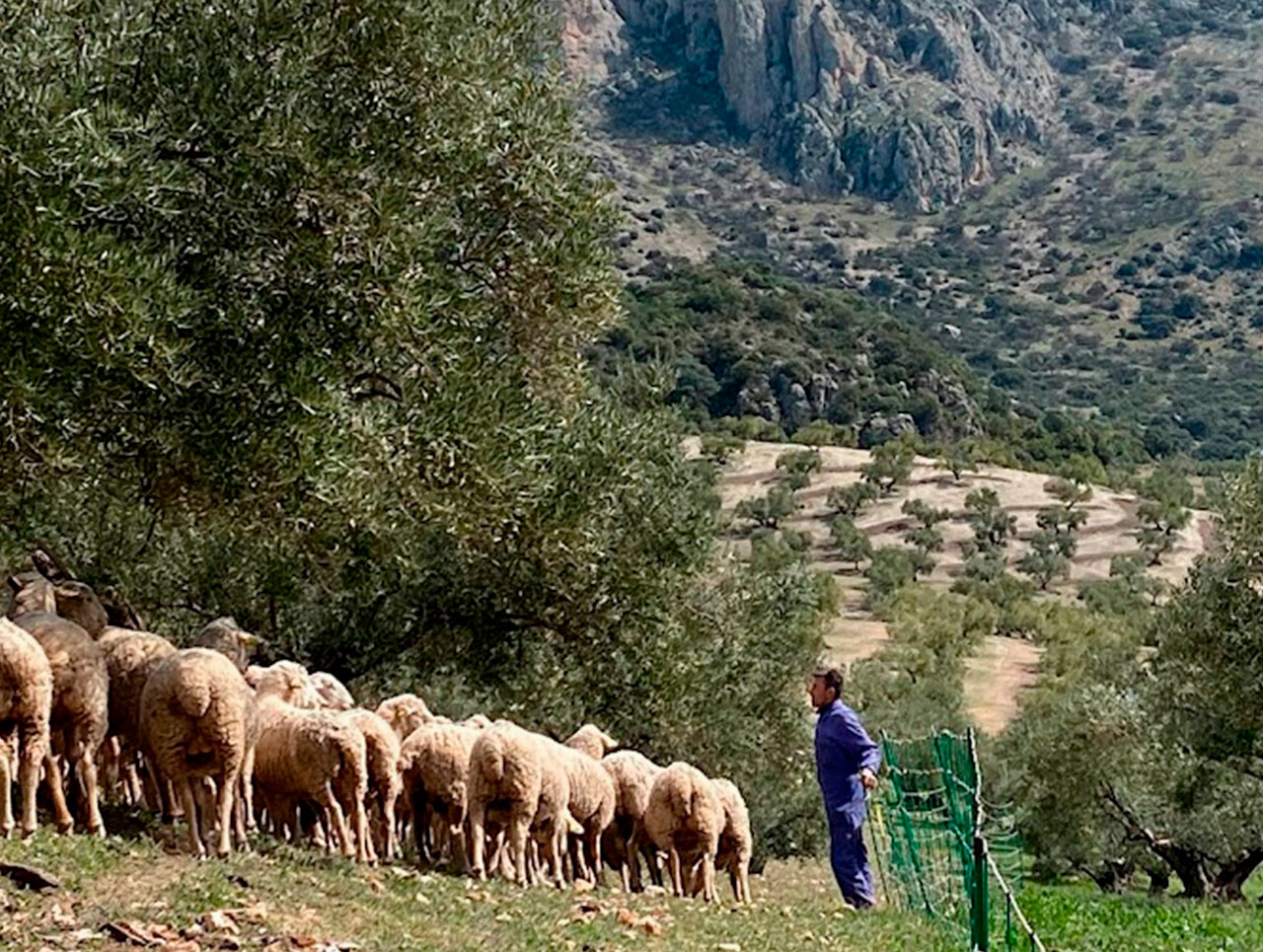
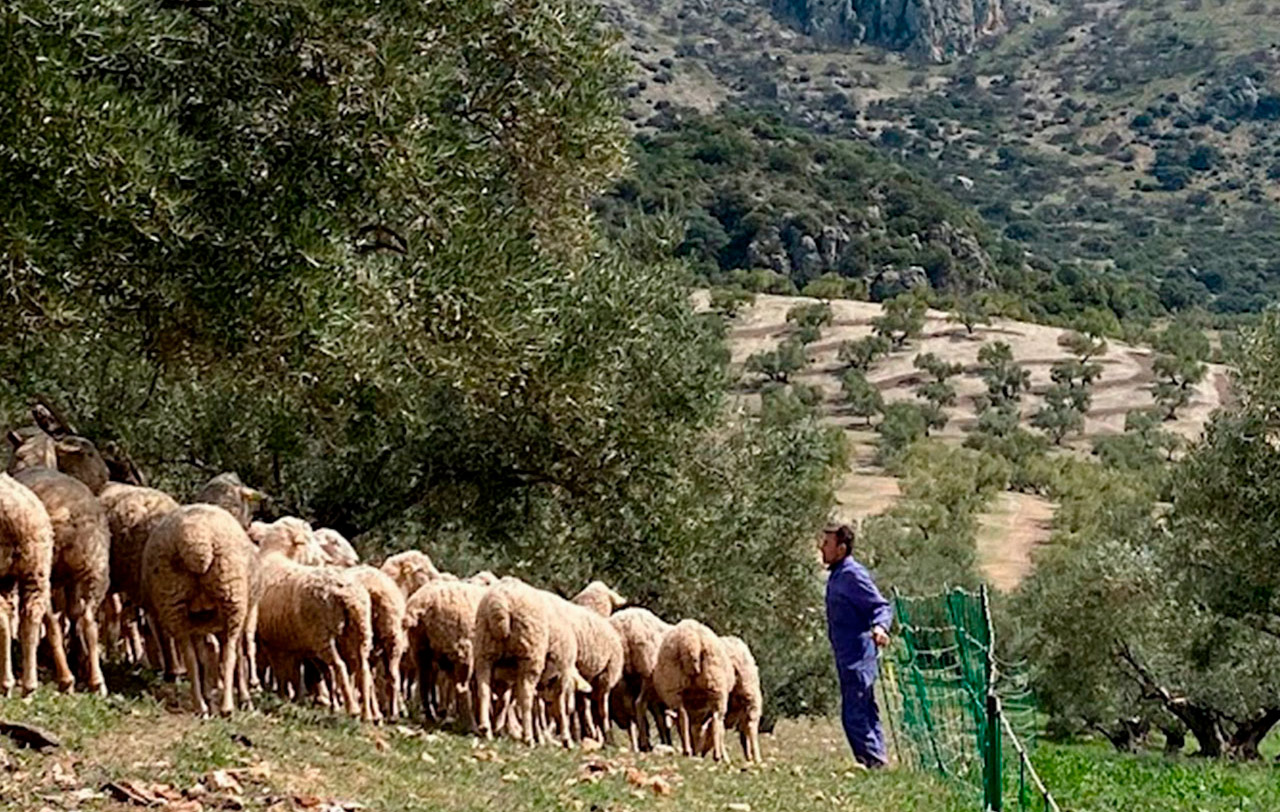
The new season in our olive grove begins at the beginning of September with the removal by our team of the shoots from our plants, using axes, although we are also helped by the sheep that have already removed a large part of them.
From then on, we continue to carry out foliar nutrition work, using products permitted under organic certification such as amino acids, deficiency correctors and potassium soap, among others.
At the same time, manure and previously composted olive leaves are spread by means of a spreader trailer to enrich the soil in the most disadvantaged areas with the main objective of generating a greater amount of biomass in the next campaign through the meadows and so that the animals have more food available at any point on the farm, in order to close the nutrient cycle in the soil through their contributions of organic matter.
In mid-October, our early harvest begins, in which our teams work in different areas where the state of ripeness and quality of the fruit has been previously studied.
The olive harvest runs from October until approximately the end of the year. At the same time, pruning work begins in the areas scheduled for that year. In this case, our pruning system has changed in recent years with the aim of renewing the plants and having increasingly younger branches, which is where more and better olives are harvested. This is what we call regenerative pruning.
At the same time as the pruning is being carried out, we continue with the work of trimming, cordoning off the twigs and collecting the sticks. The twigs are chopped up with a tractor chopper and spread so that they can be integrated as organic plant matter into the soil and the microbiota transforms it into humus.
When the harvest is finished and at the beginning of the year, depending on the state of the meadows, we start the Directed Grazing, carrying out planned movements throughout the farm and regenerating all the plots, always controlling the grazing times throughout the spring.
It is vitally important for us to do this early harvesting as it helps us to largely eliminate the “vecería”, as we can give the olive grove more time to rest, and also and very importantly, it allows us to harvest an early fruit that provides us with a higher quality for our ANCESTRAL EVOO.
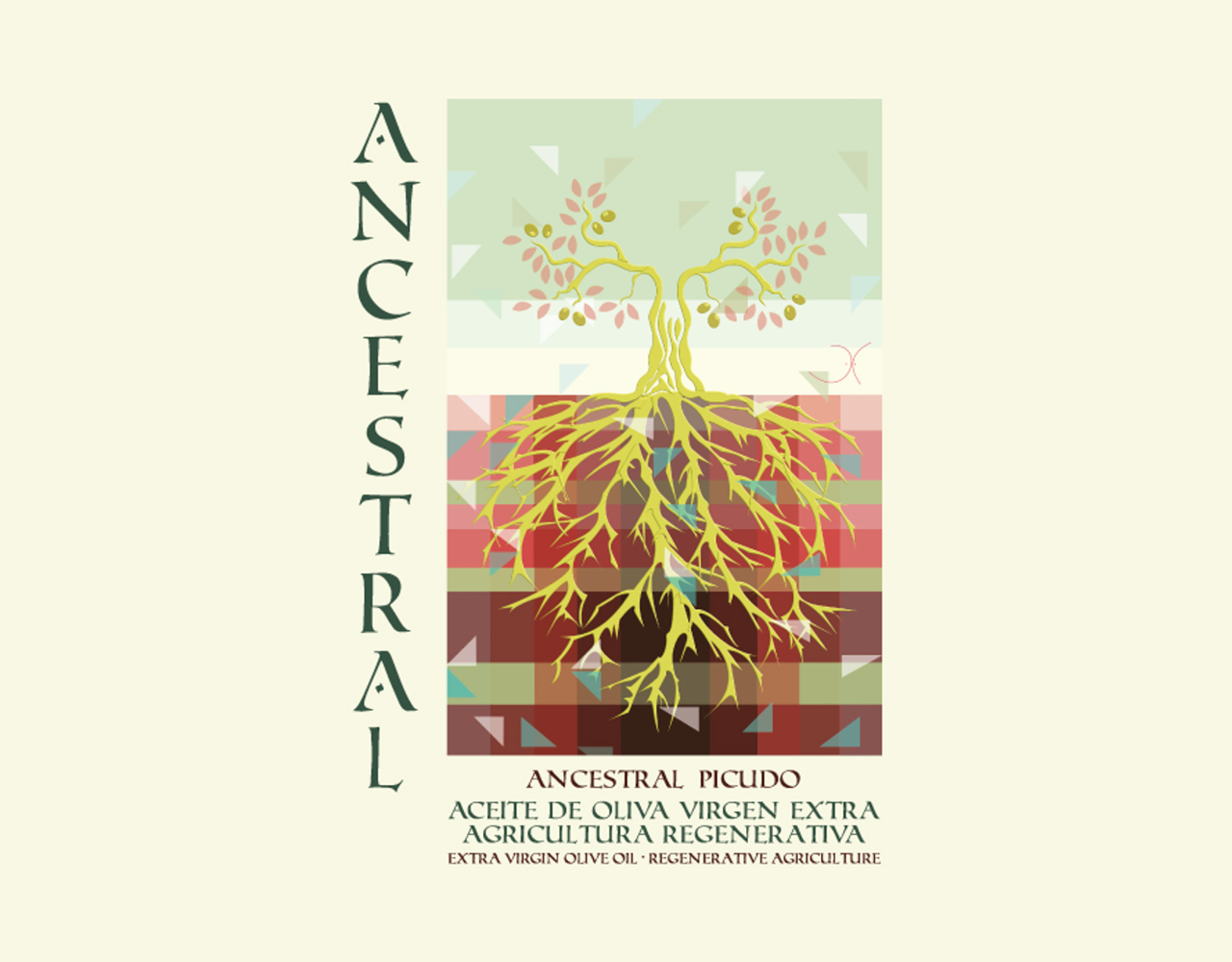
Our Image
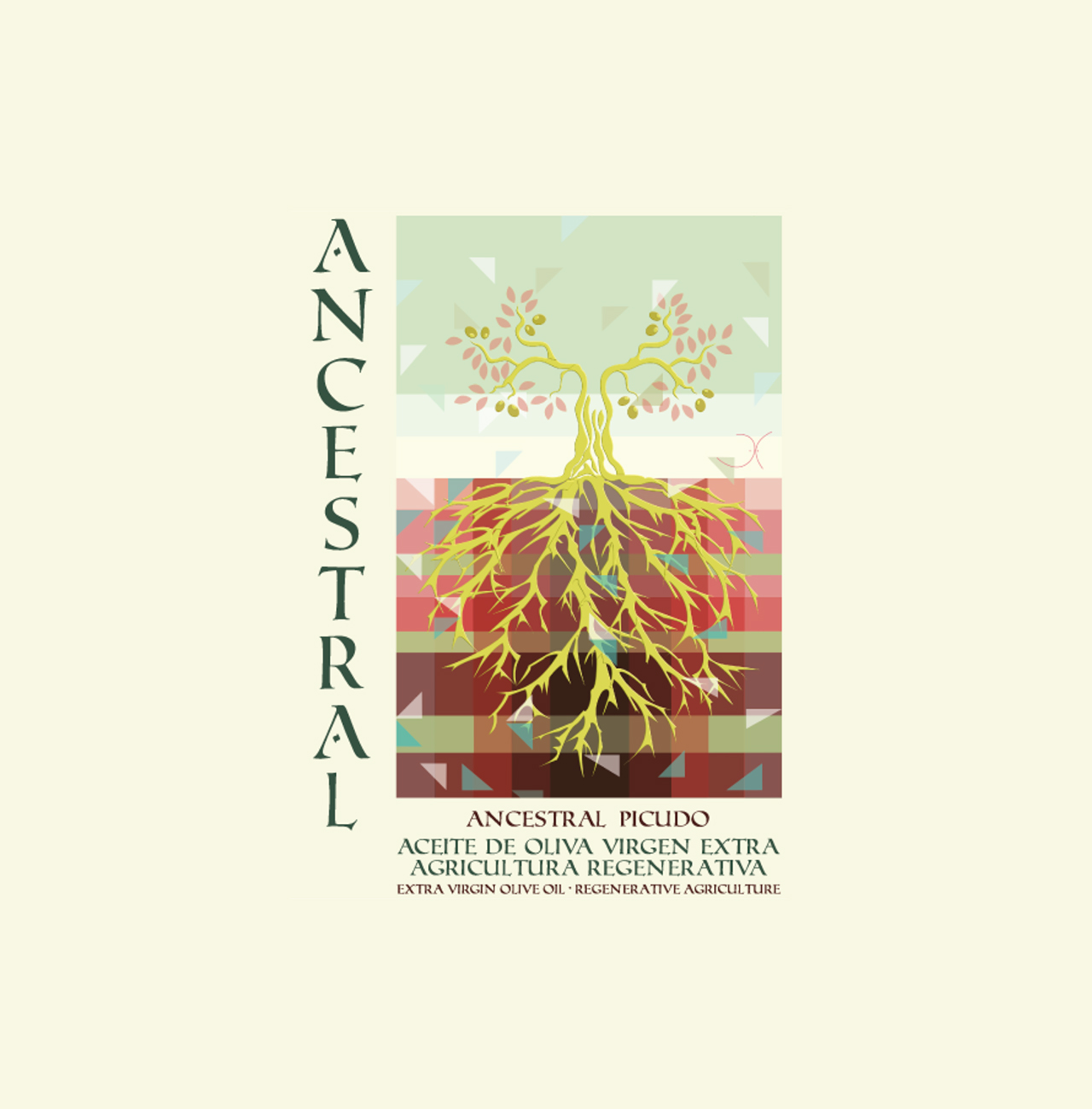
The image design of our ANCESTRAL Aove is a virtual work created by the visual artist Dayse Feijó https://www.dfeijo.com/
She was given some guidelines on the meaning of Regenerative Agriculture and the artist has been kind enough to design a conceptual work where the basic principles of these practices and their consequences on the functioning of the plants, in this case the olive tree, and the whole “Biome” with which they coexist, are expressed in a synthetic way, faithfully reflecting the philosophy of our regenerative project.
In the design it can be seen how the soil is represented as a great diamond in the rough, which can be seen in the image through the prisms that compose it.
It is also possible to appreciate that great forgotten part of productivist agriculture which are the roots, in this case large and imposing, due to the care we take with our soils.
These roots, in the form of the vascular system of a heart, give us to understand that they are the true motor of regeneration.
The special configuration of this olive tree represents life, as it is understood as a whole in which the olive grove and all the beings that inhabit it; plants, herbivores, insects, etc. work holistically so that Valle del Conde can cultivate and produce the best, healthiest and most nutritional oils.
“Regenerative agriculture is without doubt for us the ancestral agriculture in harmony with nature and human beings and for this reason we call it HAPPY AGRICULTURE”.
Contact
We look forward to answering all your questions about our products and showing you how we work.