


No products in the cart.
The ground, our greatest treasure
The Finca Regenerativa Valle del Conde has an area of 230 hectares, 217 of which are certified organic mountain olive groves and the rest are areas of menchón and sierra within the estate itself.
Our obsession is to improve day by day the health of the soil and therefore the balance of our ecosystem.
We are convinced that regeneration must begin with the foundations, in order to provide the plants (olive groves and meadows) with the nutrients necessary for their health and growth; at the same time, these plants provide shelter and food for a multitude of animals, which contributes to providing an environment in which they can live and feel safe to develop their life cycle.
But soil life does not begin at the soil surface, but beneath it.
Soil and its microbiota are the great forgotten of conventional agriculture, but for us they play a fundamental role.
The soil is home to millions of tiny beings that help us to produce better, as all these microorganisms play a very important role in providing our vegetation with better nutrition. This is due to their ability, among other qualities, to unlock nutrients and make them available to plants.
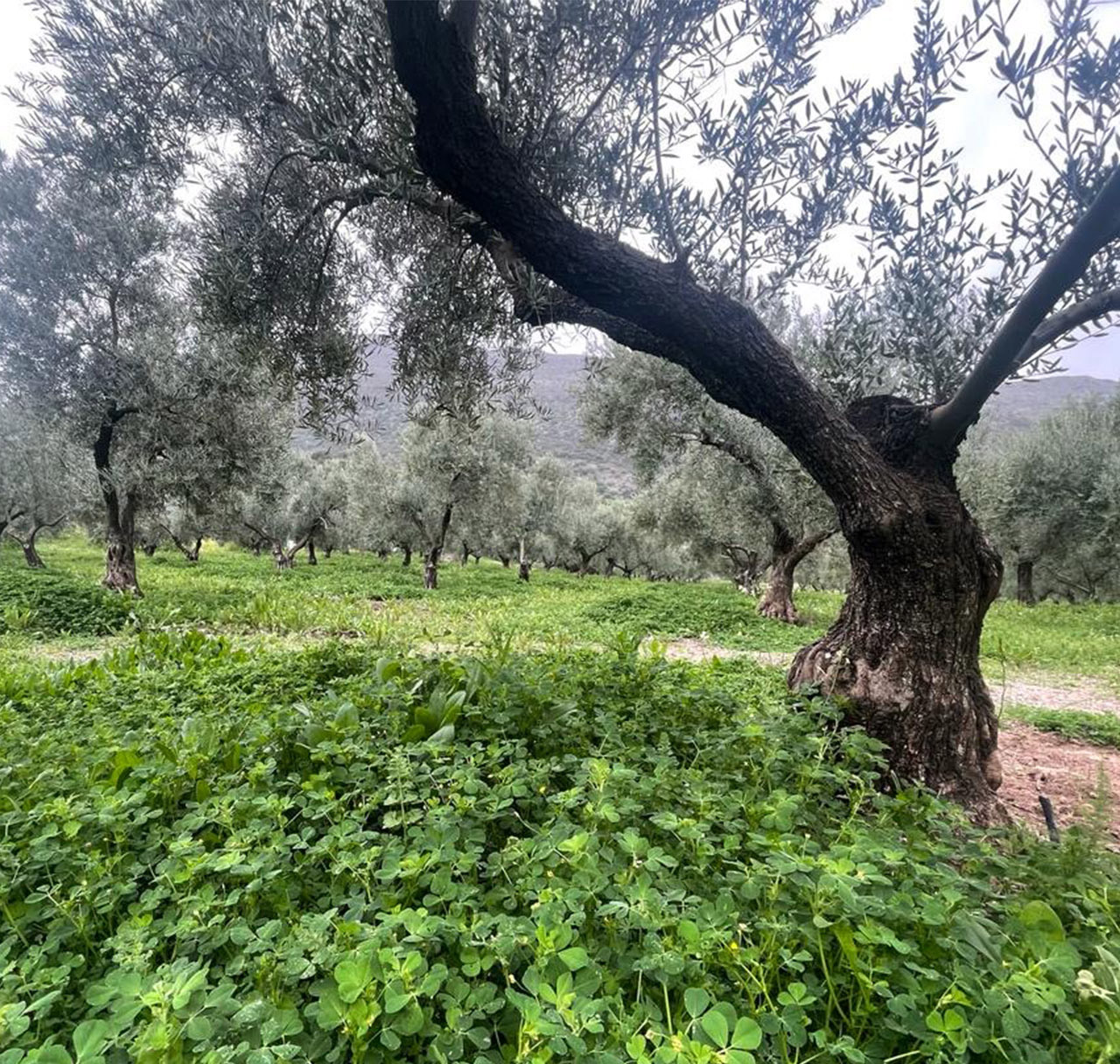
The benefits of a living floor
Having a living soil has many advantages both agronomically and environmentally.
One of the big problems with agricultural soils is that, through the degradation to which they have been subjected for many decades, there are very low levels of organic matter and micro-organisms.
A soil with optimal levels of organic matter has a more elastic structure; in this case, grasslands play a fundamental role, as their roots form a network under the soil, which greatly reduces compaction and increases the porosity of the soil, allowing greater infiltration of water and air, thus preventing erosion to a large extent.
Water retention is also multiplied by making better use of rainfall and ambient humidity. “One per cent of organic matter is capable of retaining 160,000 litres of water per hectare”, which considerably increases our subsoil reservoir.
Having a living soil means greater fertility as it increases the diversity of micro-organisms that inhabit it (fungi, bacteria, protozoa, nematodes, coprophagous fauna, etc.), which contributes to improving the nutrient cycle, decomposing organic matter and combating pests and plant diseases.
Through mycorrhizal fungi, symbiosis is created that establishes a mutually beneficial relationship, in which they provide the plants with water and nutrients in exchange for sugars derived from photosynthesis, with the consequent economic savings and improvement of the crop.
Due to this symbiosis, an increase in the plant’s root surface area is achieved by increasing the amount of “absorbing hairs” with the consequent nutritional benefit for the plant.
The deep roots of some plants, e.g. perennials, can access deeper soils where moisture is present, allowing them to survive and thrive even in periods of drought.
This helps to maintain vegetation cover and protect the soil during the summer.
A living soil therefore generates ecosystem benefits for all beings present on the farm and by extension for humans.
Our Meadows
The plant cover, which we like to call “meadow”, due to the large number of species that appear there each year, is of the utmost importance for our project as it constitutes the real food that nourishes and generates life on the farm. This biomass, passing through the rumen of the animals, becomes the engine of regeneration, feeding a multitude of species of living beings until it is integrated into the soil in the form of humus.
Our soils are enriched with this organic and natural matter, thus avoiding the use of synthetic inputs, which allows us to produce more, obtain better pasture and more balanced, nutritious and environmentally friendly food.
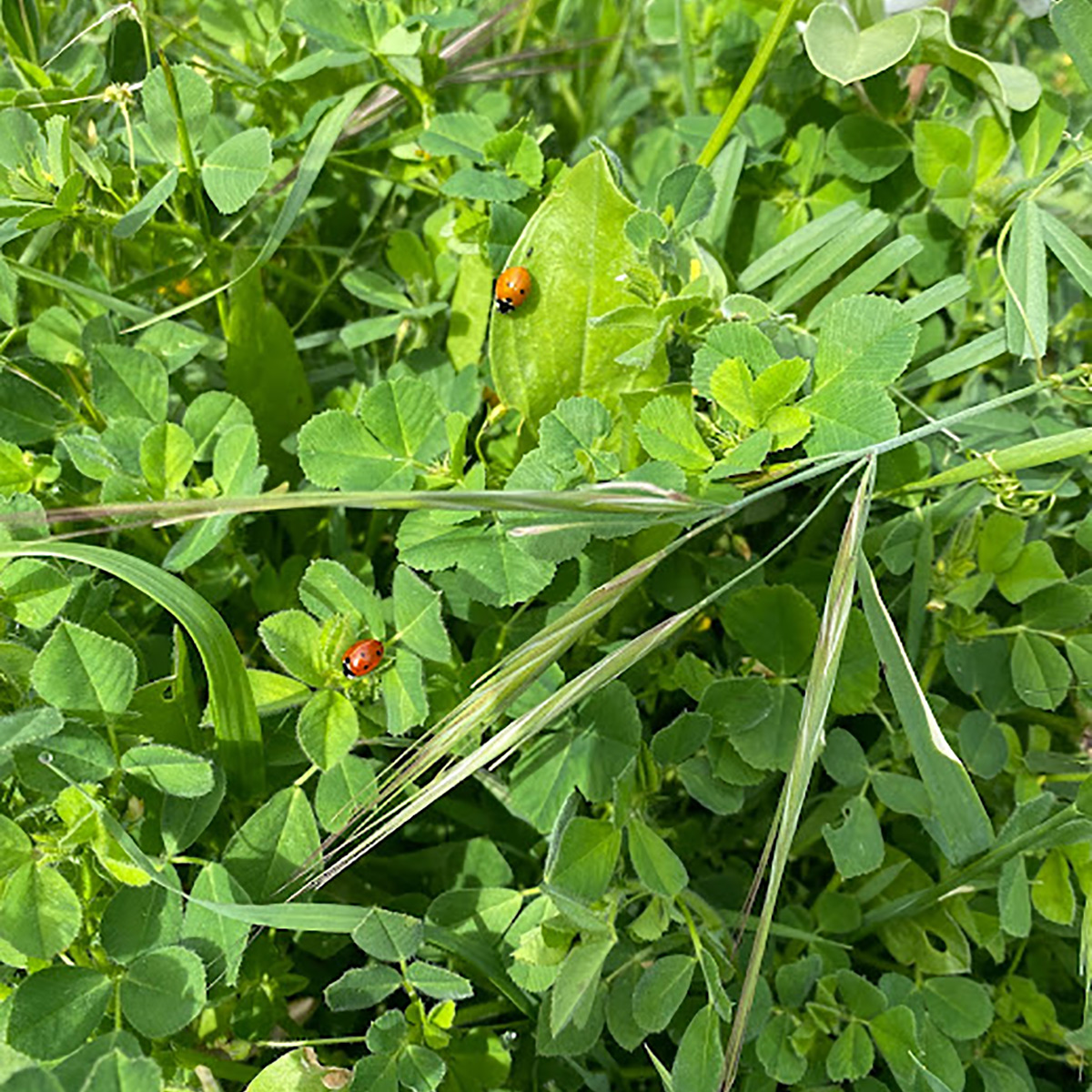
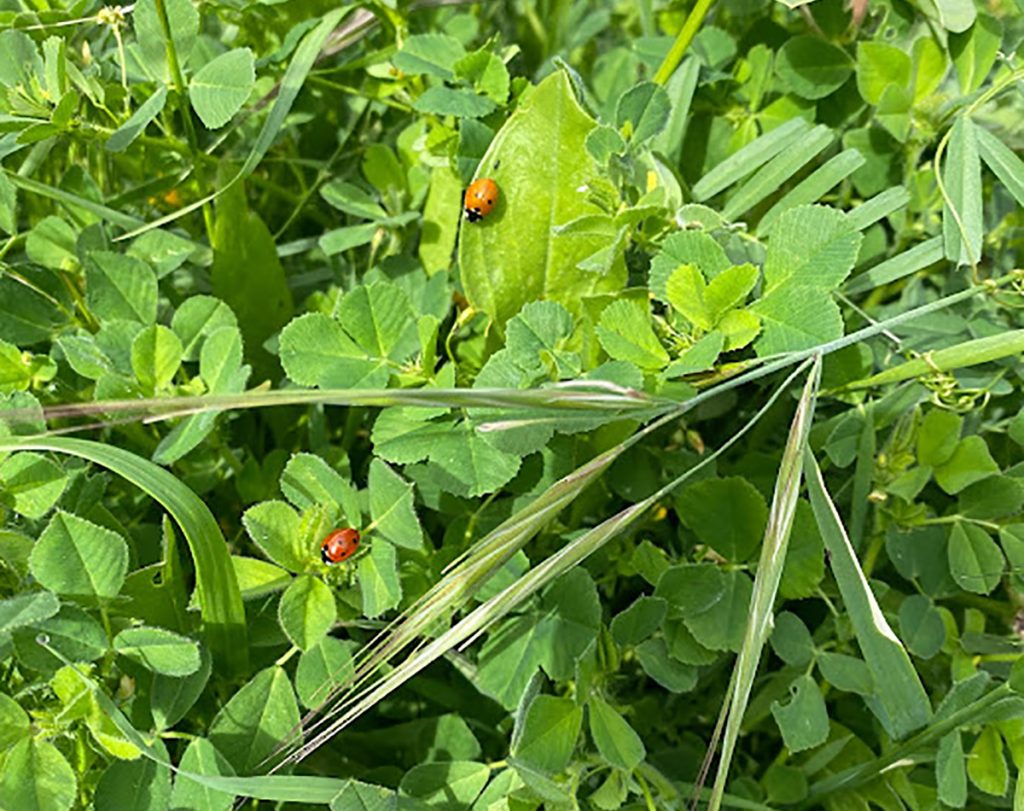
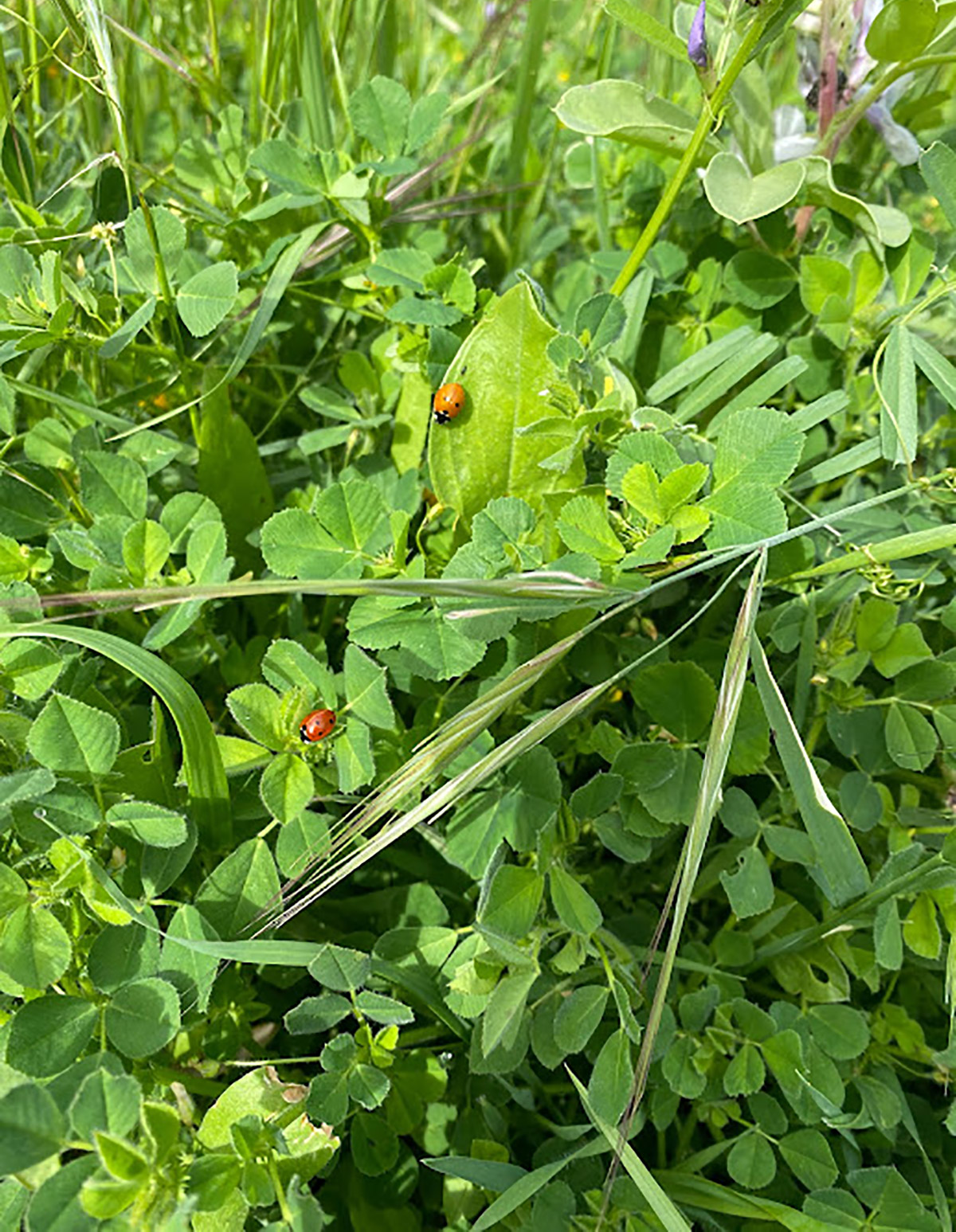
The evolution of our meadows through managed grazing is one of the most noticeable effects, as we have gone from having species of the Poaceae genus (annual grasses) dominating the entire surface of the farm, to having biodiverse meadows among which we can find many species of the Fabaceae genus (legumes), Brassicaceae (Cruciferae) and perennial grasses, all of them autochthonous species.
In the case of annual and perennial leguminous plants, we can see that they are more and more present on the farm every year. This factor is fundamental as they are very nutritious plants for animals and also have the capacity to fix atmospheric nitrogen in the soil through bacteria of the Rhizobium genus.
These bacteria are micro-organisms that carry out a symbiosis with the roots of leguminous plants, converting atmospheric nitrogen into ammonium, a form that can be assimilated by the plants, which results in an enrichment of the soil that improves the crop free of charge.
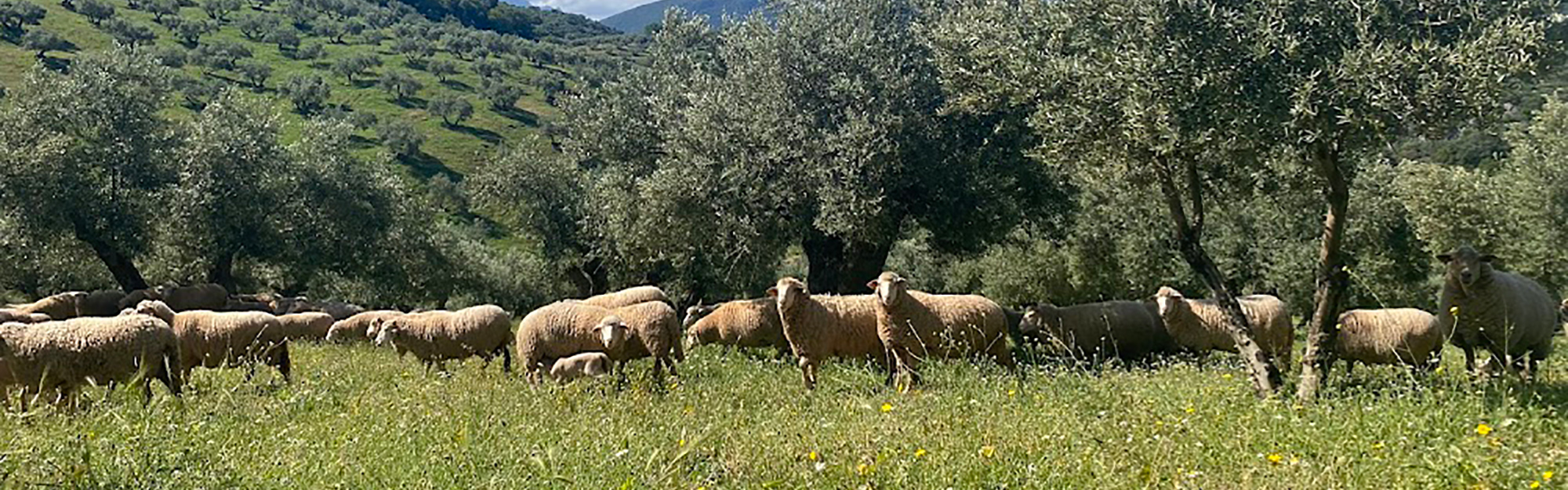
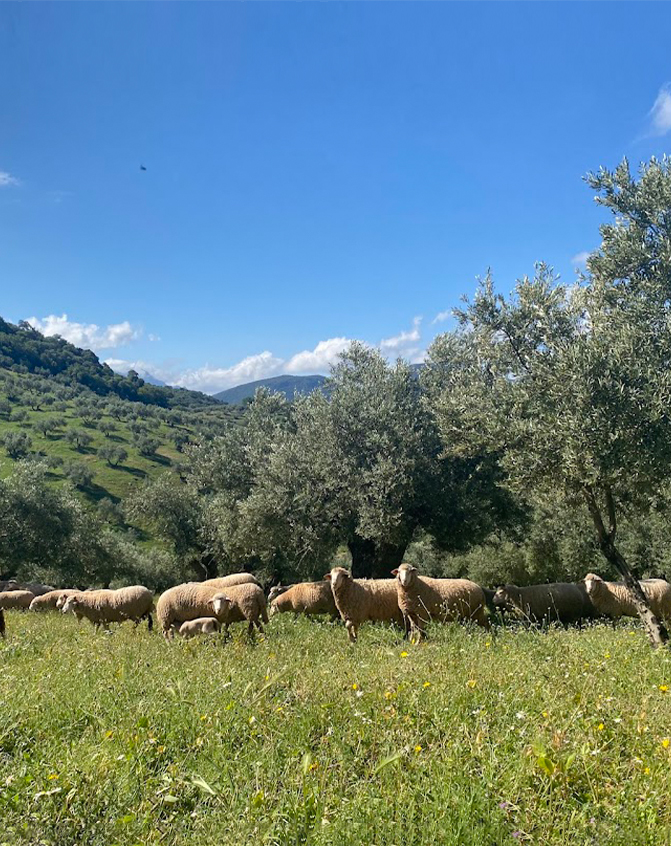
"DIRECTED PASTORAGE"
One of the most powerful and effective tools for regenerating an ecosystem are ruminants.
These herbivorous animals are like natural biodigesters, as they use their rumen to convert grass into organic matter in the form of manure and urine.
To do this we carry out what is called “DIRECTED PASTURE”. This system allows the mowing of our meadows in a controlled way, as portable stables are installed throughout the farm of between 3 and 4 hectares, moving the animals with a system previously designed to avoid overgrazing and undergrazing, which can be so detrimental to the life of the soil and plants.
For this purpose we use special nets connected to an “electric shepherd”.
The ecology of grazing and soil-plant-herbivore interaction multiplies the ecosystem services obtained with this practice.
· The natural resources of the farm, in this case the meadows, are used to feed the livestock.
· Pollination of the plants is encouraged. During the flowering season, the pollen sticks to the sheep’s wool and travels from one side of the farm to the other.
· The manure facilitates the dispersal of the seeds throughout the rest of the plots, creating more biodiverse grassland.
· All this movement inevitably affects the topography and structure of the vegetation, which is richer, more nutritious and abundant, but also the rest of the animals (large and microscopic) benefit from the grazing activity, considerably increasing biodiversity.
· Grasses need the help of ruminants to remain healthy and efficient. Grasses need to be eaten in order to resprout efficiently and fix atmospheric carbon in the soil. This same nibbling of legumes allows them to release the nitrogen they have accumulated and make it available to our olive trees.
· This system is also tremendously beneficial for the environment, as in the summer, the risk of fires is largely avoided.
· Carbon sequestration is enhanced, which contributes to mitigating climate change.
Contact
We look forward to answering all your questions about our products and showing you how we work.